Why Lobsters?

As we're sure most of you are wondering, where did "Wandering Lobsters" come from? To put it simply, it's a reference to an episode from the sitcom, Friends, where the character Phoebe explains her lobster theory to show how she knows Ross and Rachel were meant to be. She states, "It's a known fact that lobsters fall it love and mate for life. You can actually see old lobster couples walking around there tank holding claws." We picked up the nickname ourselves when we first started dating in college, and for whatever reason it has stuck with us since then.

Tuesday, November 20, 2012

Is it a celebrity? No, just a muzungu


Life in Kenya is very different than in the U.S., starting with the fact that people (especially school children) love to greet us and welcome us every day. There are always so many people just walking or selling things on the street.  We walk down the street to the Kipepeo office where we are volunteering, and we hear many times “muzugu” (“white person,” but it’s not a negative or derogatory), and also “How are you?” and then immediately “I’m fine!” because I think this is the first thing that the school children learn in English.  We’ve had some of the older people in the community just wanting to shake our hands, or take pictures with us. The school girls want to feel my hair, and they sometimes call out to us in unison when we walk by or they will hover right around us when we go to town in Luanda.   

The main junction in Kima, where the piki-piki drivers wait, the Kipepeo office is just past this
Another view of the junction
Life is also much simpler here.  We have been hosted by Julius, one of the heads of Kipepeo. Clinton, who often cooks for us, also lives there in just a small 2 bedroom apartment-like building.  All of our laundrey is done by hand.  Almost all our meals are cooked (unlike the U.S. where Sam and I often eat cereal for dinner).  There is no running water or even really a kitchen in the apartment, and a small charcoal grill-like device is how all of the meals are cooked---called a “jiko.” (gee-koh). They don't have any refrigerators, so we eat mostly non-perishable food.  We always sit around the small coffee table in the gathering room to eat our meals together.

Our bedroom in the apartment
After eating breakfast, we usually head out on the 10 minute walk to the Kipepeo office to get ready for the first computer class.  Like Sam said before, the power goes out almost every day (we learned this happens even when it doesn’t rain).  So you just do your best to work around it.  Our motto here is “Be flexible!” because your activities can change from day to day and nothing ever starts on time (even the primary school graduation we were invited to started 2 hours late). 

Clinton (left), Julius (middle), and Sam in our main room (you see the candles because the power is out)

Usually the day is over somewhere around 5pm, but sometimes we end up hanging out at the office until almost dark, then head home to eat dinner.  Overall, we’ve already met some great people and made some great friends. Although most of our time is spent on computer class, Kipepeo has so many projects and goals for the future.  I can’t wait to see what’s in store for the next two weeks!


(Written November 14th)

Wednesday, November 14, 2012

First week of volunteering


Yesterday, we finished our first week in Kenya. The majority of our time was spent learning the everyday life of the Kipepeo (“butterfly” in Kiswahili) staff and the people of Kima or volunteering at the various Kipepeo projects. Our largest responsibility was teachig two computer classes per day to disadvantaged members of the community.
This is Clinton and Julius, our roommates. Julius is one of the main members of Kipepeo.
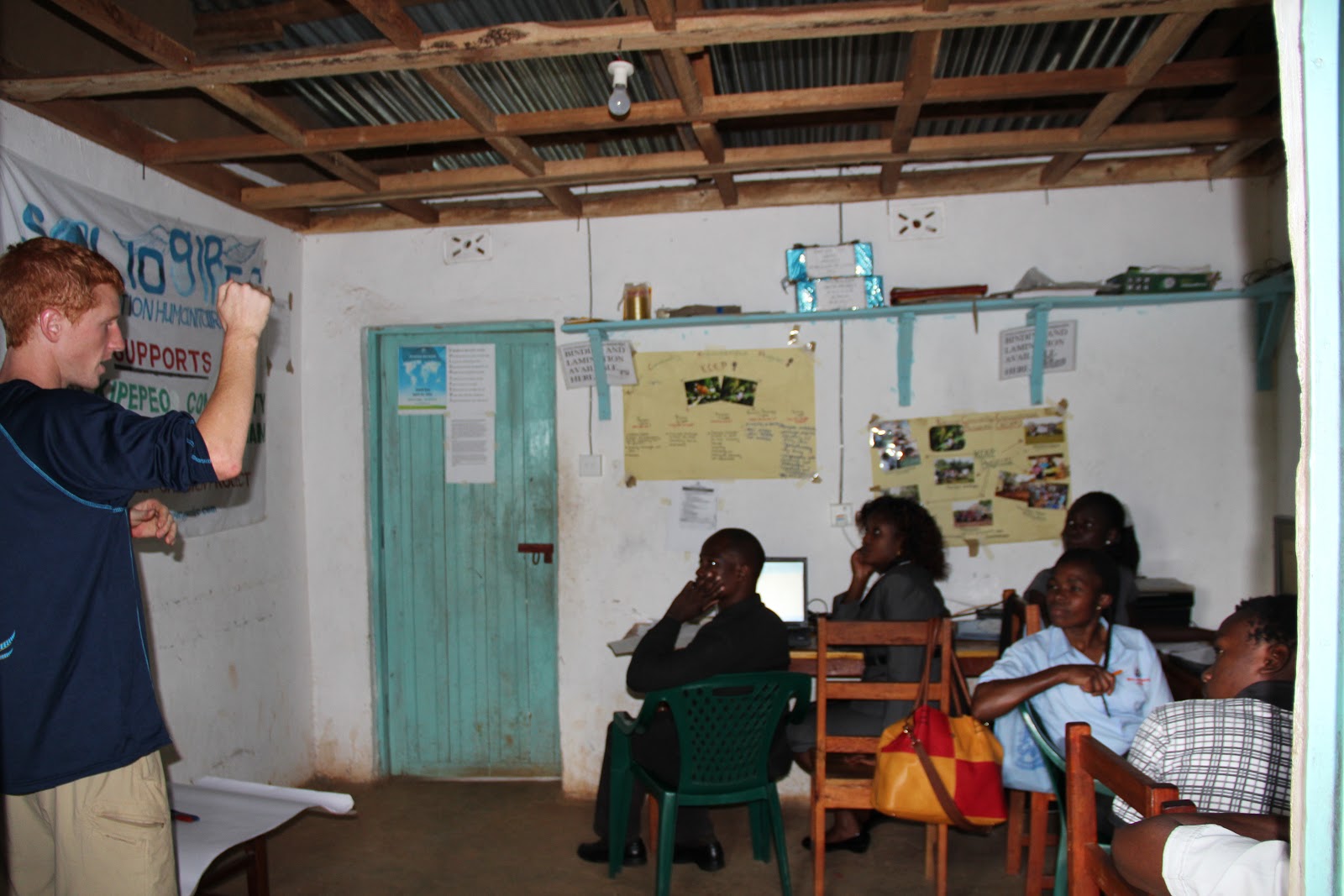
Many people in Kenya, and even more so in the small town of Kima, have never used a computer so we had to start with the absolute basics (monitor, tower, keyboard, mouse, etc.). We will work our way through the Microsoft Office packages and include Internet with email. At first, this seemed like a daunting task to us since we only have 3.5 weeks to do it, but the first week went well, with everyone (who came to class) completing their typed CVs in MS Word. We start MS Publisher and the Internet tomorrow.
The students are great and it shows that many of them are motivated to better themselves. We have some who just graduated primary school and others who have been working for 20+ years and never used a computer, including the head of the local health clinic.
There are two major challenges (among many others) for the classes to overcome. The first, which some people here call “African time,” is the mindset and culture that time is not nearly as important as in the US where we have the common phrase “time is money.” This may stem from the poor reliability of their infrastructure. This is related to the second major challenge which is the loss of electricity on a daily basis, especially when it rains. Obviously, it is difficult to teach a computer class when the power goes out and can remain out for as little as 5 minutes or as long as the entire day.
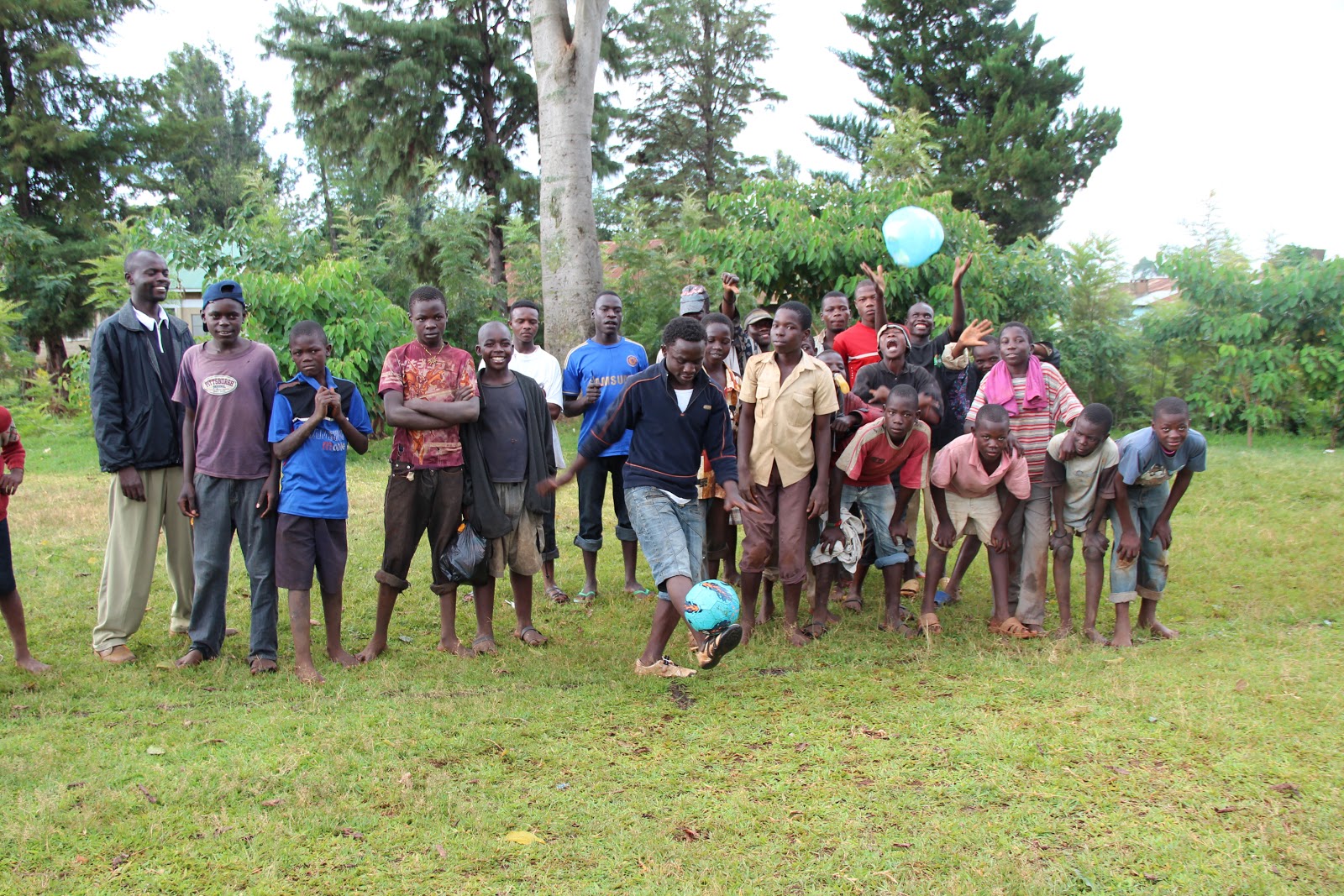
The street boys of Luanda.
On Friday, we spent the afternoon in Luanda (larger than Kima) where there are around 30 boys living on the street, appropriately nicknamed “street boys.” They are orphaned with no guardians and spend most of their lives struggling on the street. They range in age from 5 to 27. Kipepeo reaches out to them each Friday by setting up a soccer game for them then feeding them a meal at a nearby hotel. The thought of being completely responsible for yourself at that age is so foreign to us. We will be going back next Friday and hopefully can partake in the game once my leg is healed a bit.
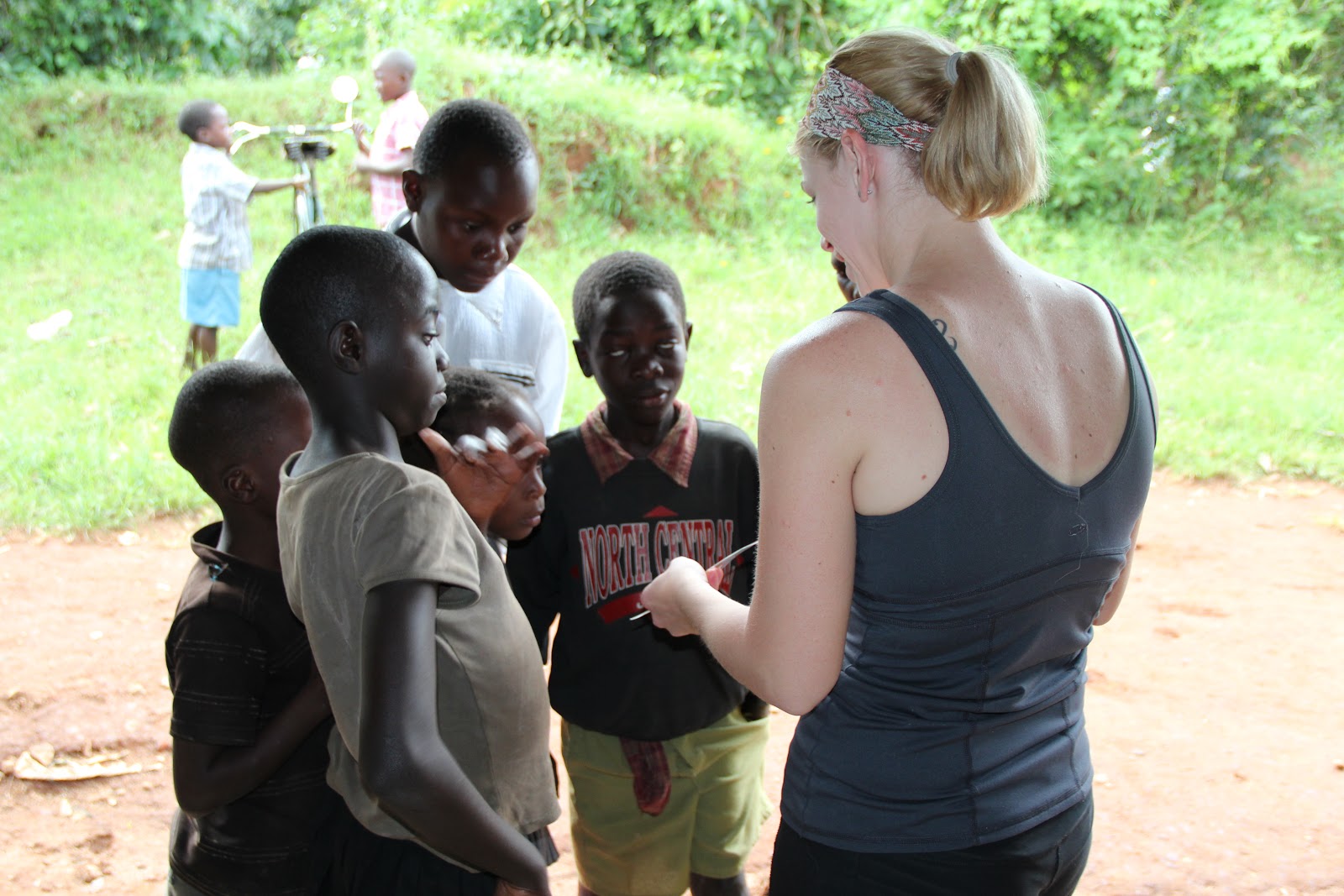
On Saturday, we spent the afternoon with some of the orphans of Kima. They have guardians to take care of them but little else. Many have lost their parents to AIDS. We read books, introduced them to computers, took their pictures, gave them stickers (big hit), and did English flash cards. Kipepeo also fed them and then picked some vegetables they grow out back for them to take home for a meal or two. They loved playing with the muzungus (one word for Americans) and we are excited to see them all back next Saturday.
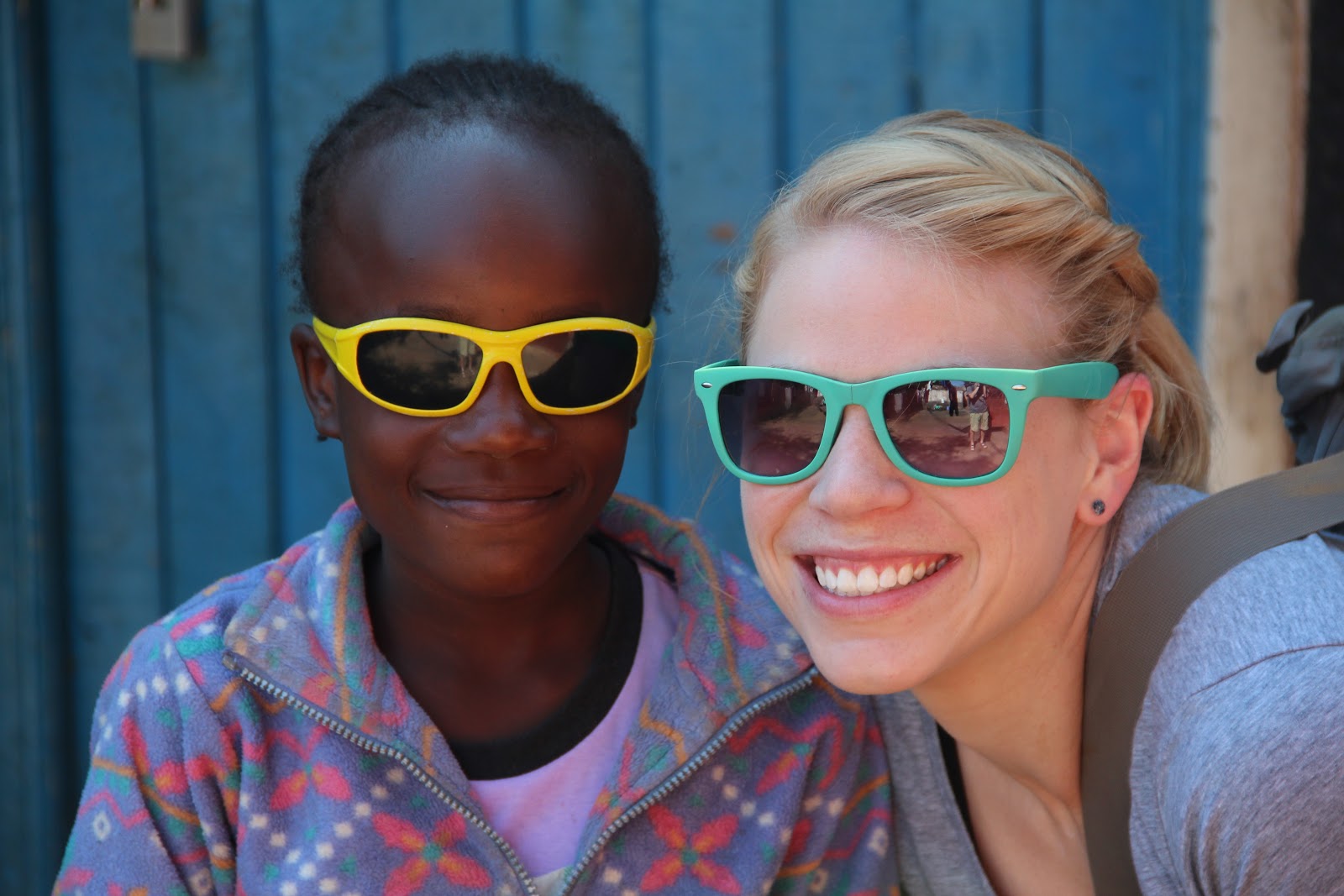
Patricia, one of our neighbors, sporting some cool shades with Erin.
Our first week here in Kima, Kenya has been amazing and the people have been extremely welcoming. We can only hope this week of computer classes goes as well as last week. Erin will be spending some time at the local health clinic where she will dispense prescriptions and hopefully counsel HIV and AIDS patients. We have a growing list of things we would like to do here and it seems we may not be able to get to them all, but two other volunteers from Japan arrived late last week so hopefully they can help in these endeavors.
(Written November 11th)

Saturday, November 10, 2012

Our first (and hopefully only) motorcycle accident

-->
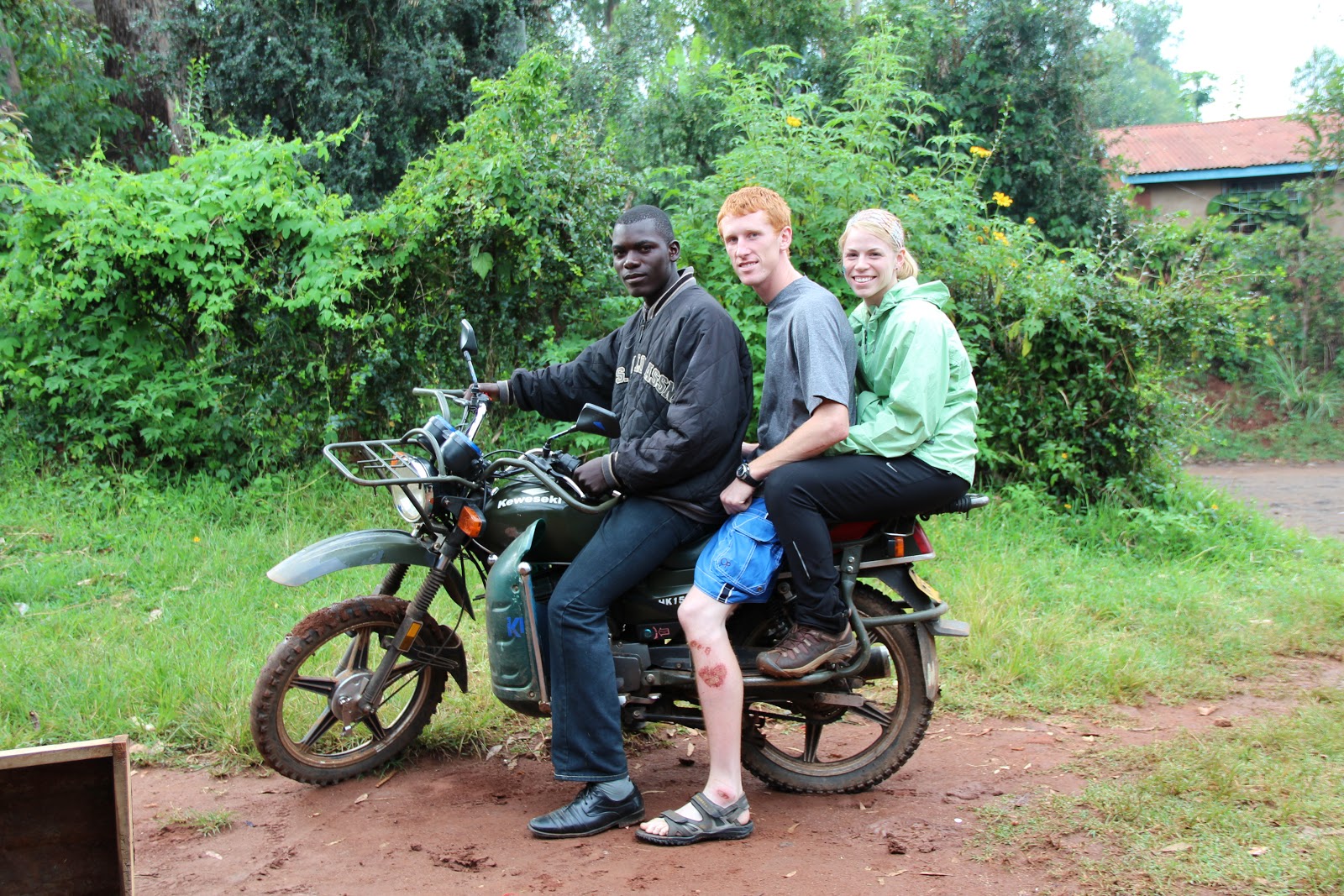
When I expressed qualms about riding the motorcycle a couple days ago, I was reassured that we would be safe on them. Guddy (like goo-dee) is the driver that takes the Kipepeo volunteers around.  When he’s not taking us somewhere, he taxis other people around town for work.  Guddy was bragging the other night about how he had never fallen on this motorcycle, ever since he was driving in 2007.
Two days ago, Sam and I met up with Guddy so that he could take us to Luanda. Luanda is a slightly larger town than where we are staying in Kima, and it’s only about 10 minutes away by motorcycle.  They have their big market days on Monday and Thursday, and if we need to go to the bigger supermarket or Cyber Café, then we have to make the trip to Luanda.
By this time, we had gotten used to both of us riding on the back of Guddy’s motorbike, because he usually takes us to the Kipepeo office in the morning, and he had taken us to Luanda before.  We were about half way to Luanda, coasting down a hill, when we heard a loud pop!  The back tire blew, and Guddy was steering side to side to try to keep the motorcycle upright.  We ended up sliding down to the left, with the motorcycle off the road.  Sam slid on his left side like sliding into a base, while I ended up somersaulting into the middle of the road.  We were more stunned than anything, and we had some good road rashes.  Sam’s pants and rain jacket were torn, but none of us were seriously hurt.


As soon as we were off the road and had gathered our things, a huge crowd of people were immediately upon us, especially a lot of kids. One of our students from computer class stopped and offered to give us a ride, but he also had a motorcycle, and we weren’t quite ready to jump back on.  On top of everything, it started to rain.  Guddy, who only had a few scratches, stayed with his bike so that he could take it back to Kima.  Sam and I ended up catching a matatu (the taxi bus/van) back to Kima ourselves, so we could get cleaned up. Everyone within Kipepeo felt really bad, but it wasn’t Guddy’s fault, and he did his best to control the bike.  That was two days ago now, and we haven’t ridden another motorcycle yet, but it will be inevitable as we still have three weeks left here.

(Written on November 9th)

My first motorcycle ride

-->
I have always been against motorcycles, especially since my pharmacy clinicals, working in the ER on the first day of spring when so many people would come in due to crashes. Yet, in Africa, motorcycles are one of the most popular ways to get around.  We managed to avoid them (called boda-bodas) in Uganda, especially the crowded streets of Kampala.


But when we arrived in Luanda, Kenya just two nights ago, we found out the only way to get to the volunteer host house is by motorcycle (in Kenya they are called piki-pikis). Of course it was nighttime.  And it was pouring down rain. Sam hopped on the back of one, and I on the other with our big packs.  Everything happened so fast, I was unsure what to make of the situation.  I ended up having to close my eyes most of the way because the rain was pelting our faces. Other than being soaked from the rain, the ride was rather uneventful (and only took us about 10 minutes).   I better get used the motorcycle rides, because Julius, one of the leaders of the Kipepeo Community Empowerment Program where we are volunteering, told me we will be riding a motorcycle to get around almost daily.

(Written on November 5th)

Thursday, November 8, 2012

Tracking Mountain Gorillas in Bwindi

Calling the small town of Buhoma, Uganda “remote” is an understatement. After a 12 hour bus ride, 4 or 5 of which were on extremely rough dirt roads through the Ugandan mountains, we arrived in Buhoma and hitched a ride in a pickup with a local and an American volunteer to our camp area in Bwindi.

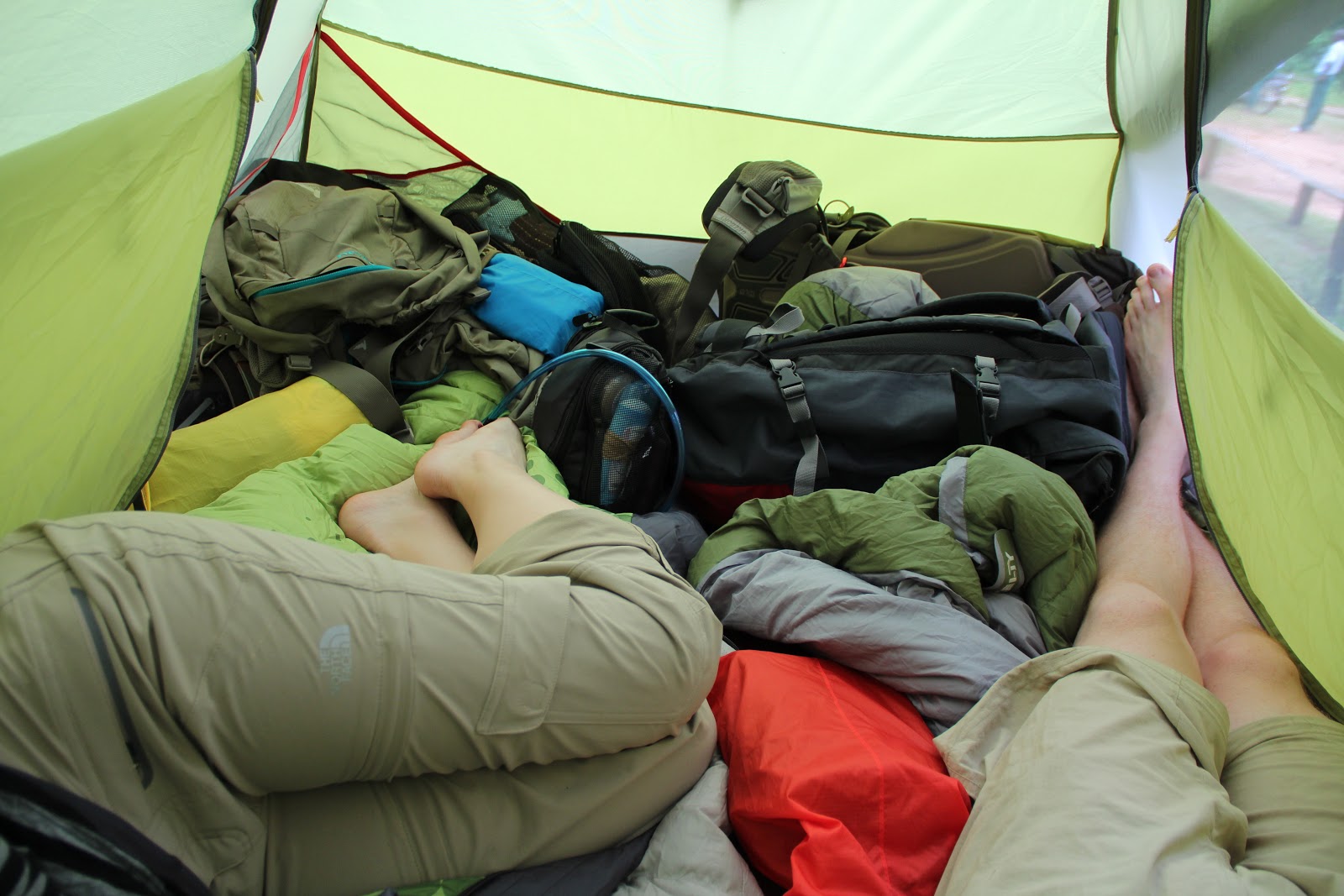
The bus ride was overnight so we didn’t get much sleep (surprise, surprise). The next night, Wednesday, would be our first night not spent in a plane, airport, or bus since we left home, so, as weird as
it may sound, we were excited to sleep in our tent. Then we could recover from the long, violent bus ride so we can be fresh for tracking the next day. A Peace Corps volunteer from Ohio and a couple from the UK gave us some good advice for tracking over dinner.


During our travelling, we weren’t eating much so we had a huge breakfast (eggs, fresh pineapple which was as good as in Costa Rica, toast, juice, and bananas) that next morning. We registered with the Ugandan Wildlife Agency and walked through the sloppy weather to the briefing area. Our guide, Damien, along with two well-armed security escorts, led us up the 2300 ft climb on muddy slopes where we found the recent tracks of the Rushegura group of gorillas. This took us off the trail and into the thick of the jungle where machetes are a must for the guides to clear a path. Other guides ahead of us had located the gorillas and spoke with our guides via radio until we found them.


Once reaching the near vicinity of the gorillas, we couldn’t eat, drink, speak loudly, carry walking sticks, or get too close to them. This is for their protection from disease and our protection from them charging us. If they did charge, we were told not to run or look them in the eye, but stay put. Luckily, we wouldn’t find out how well this works.


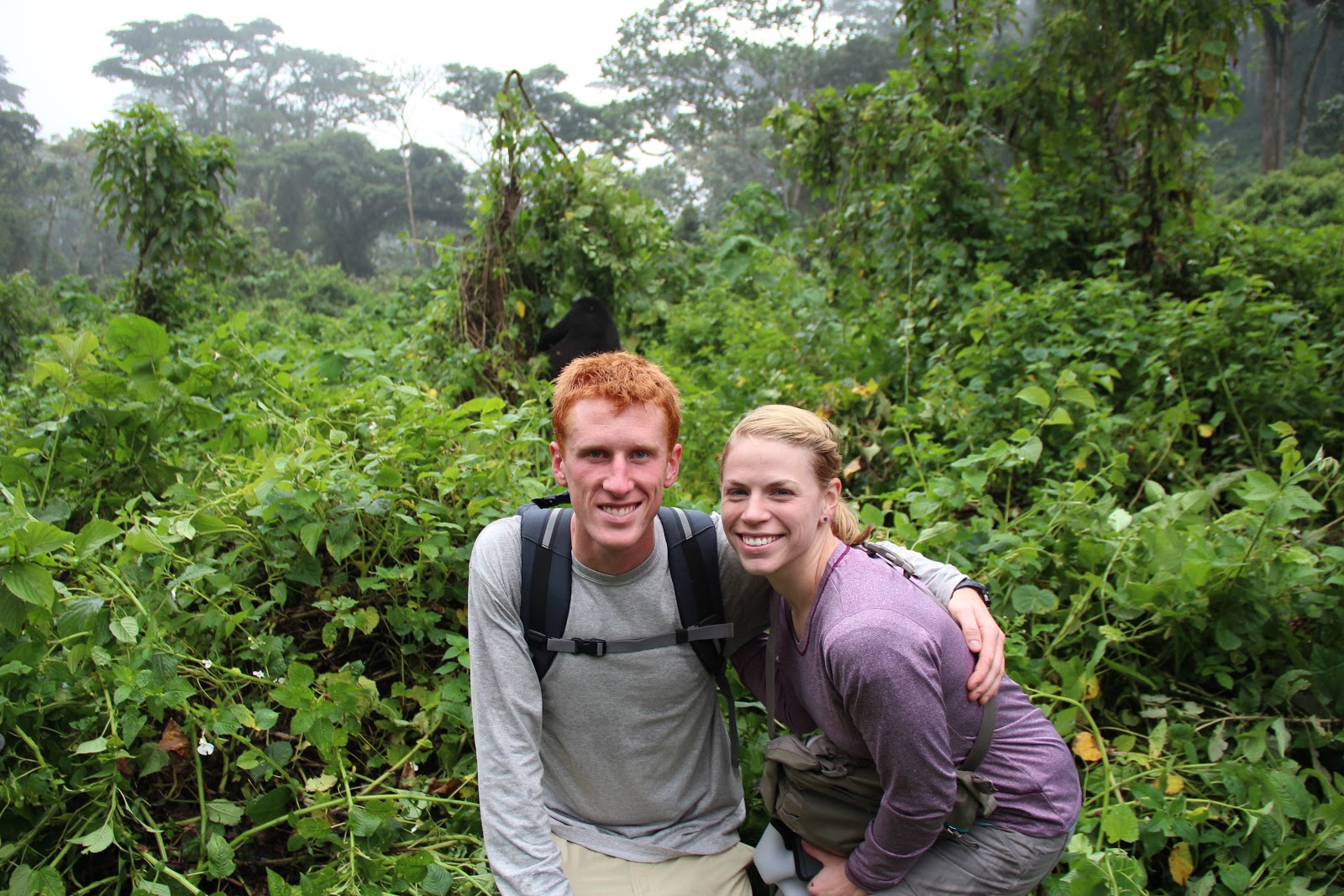
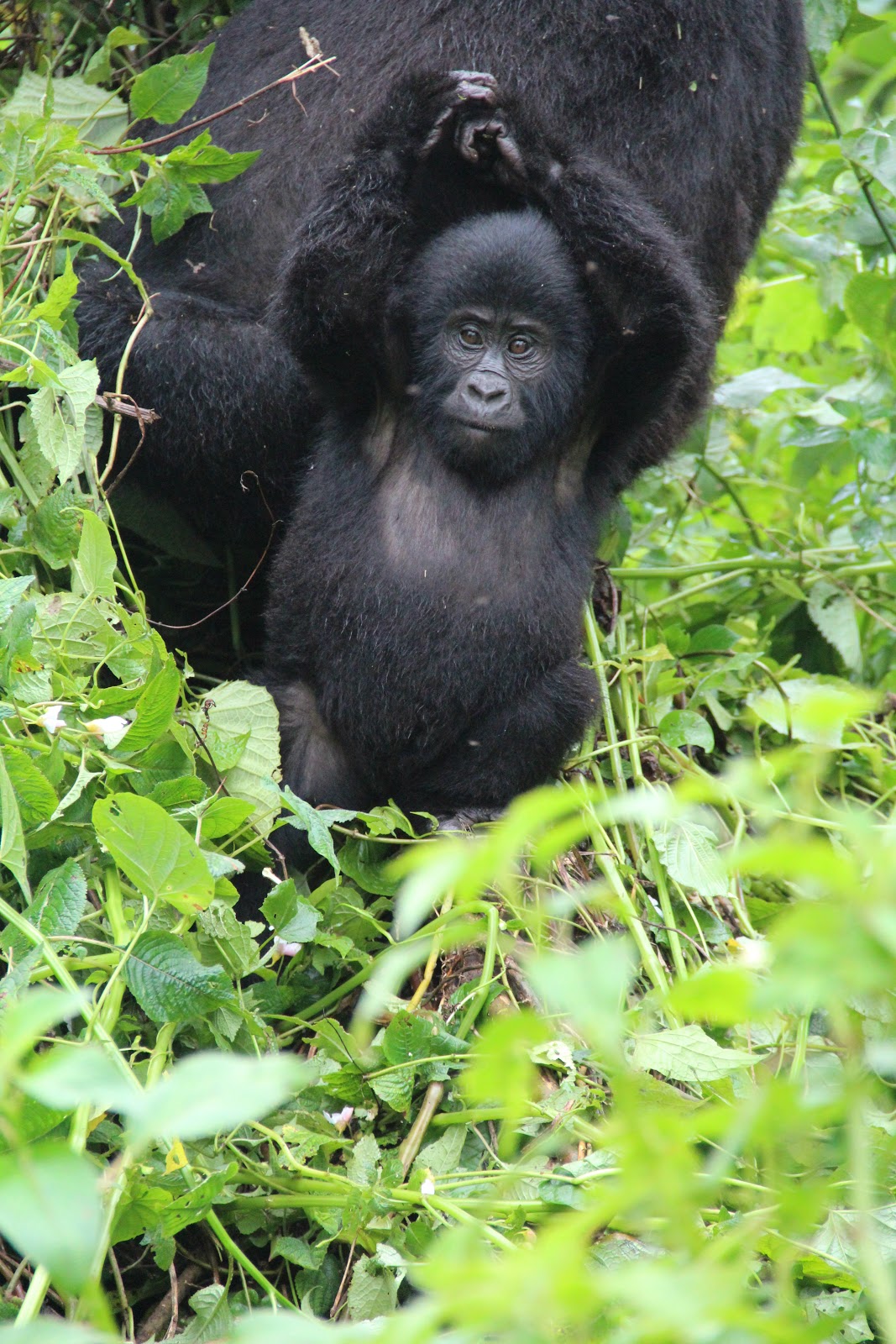
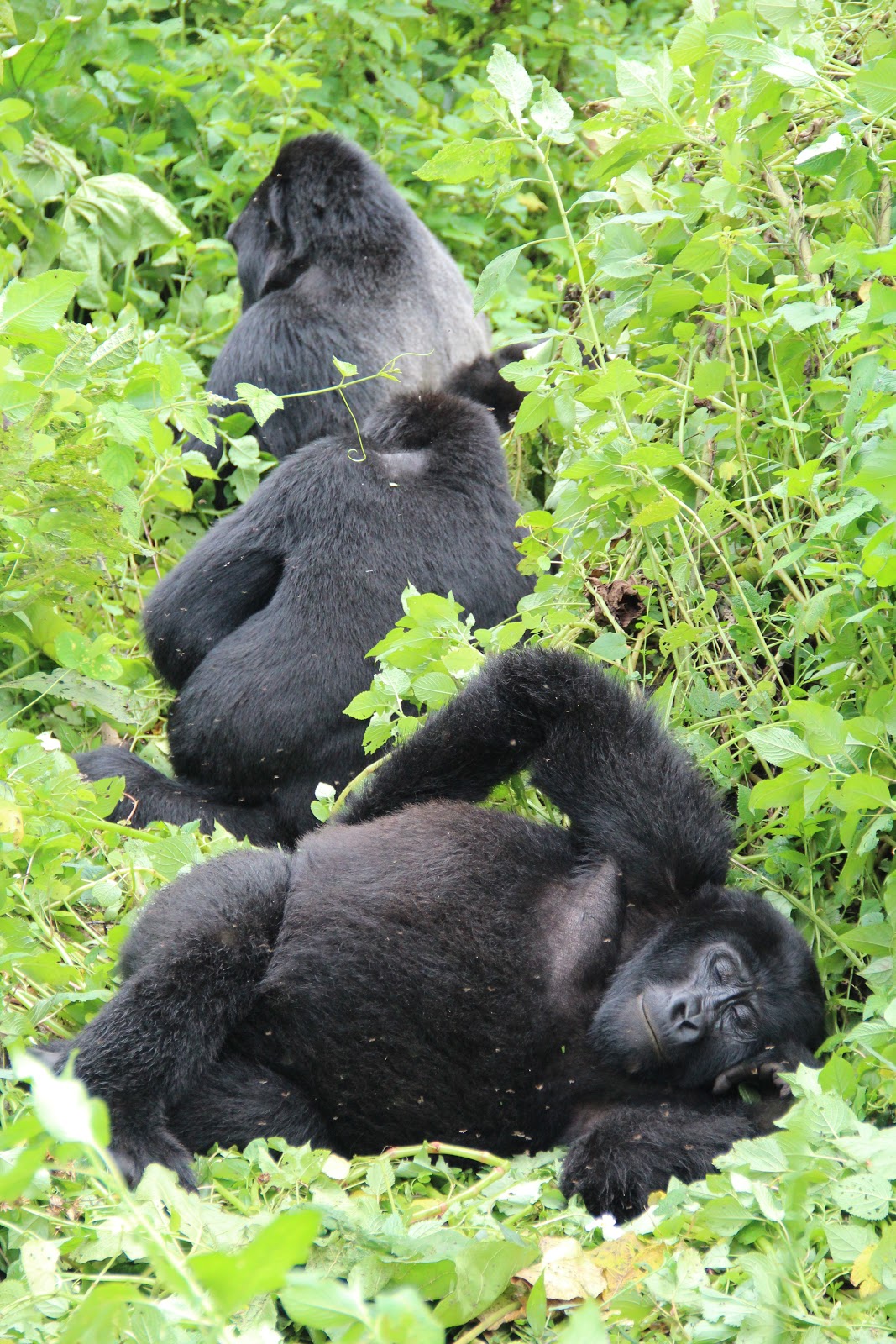
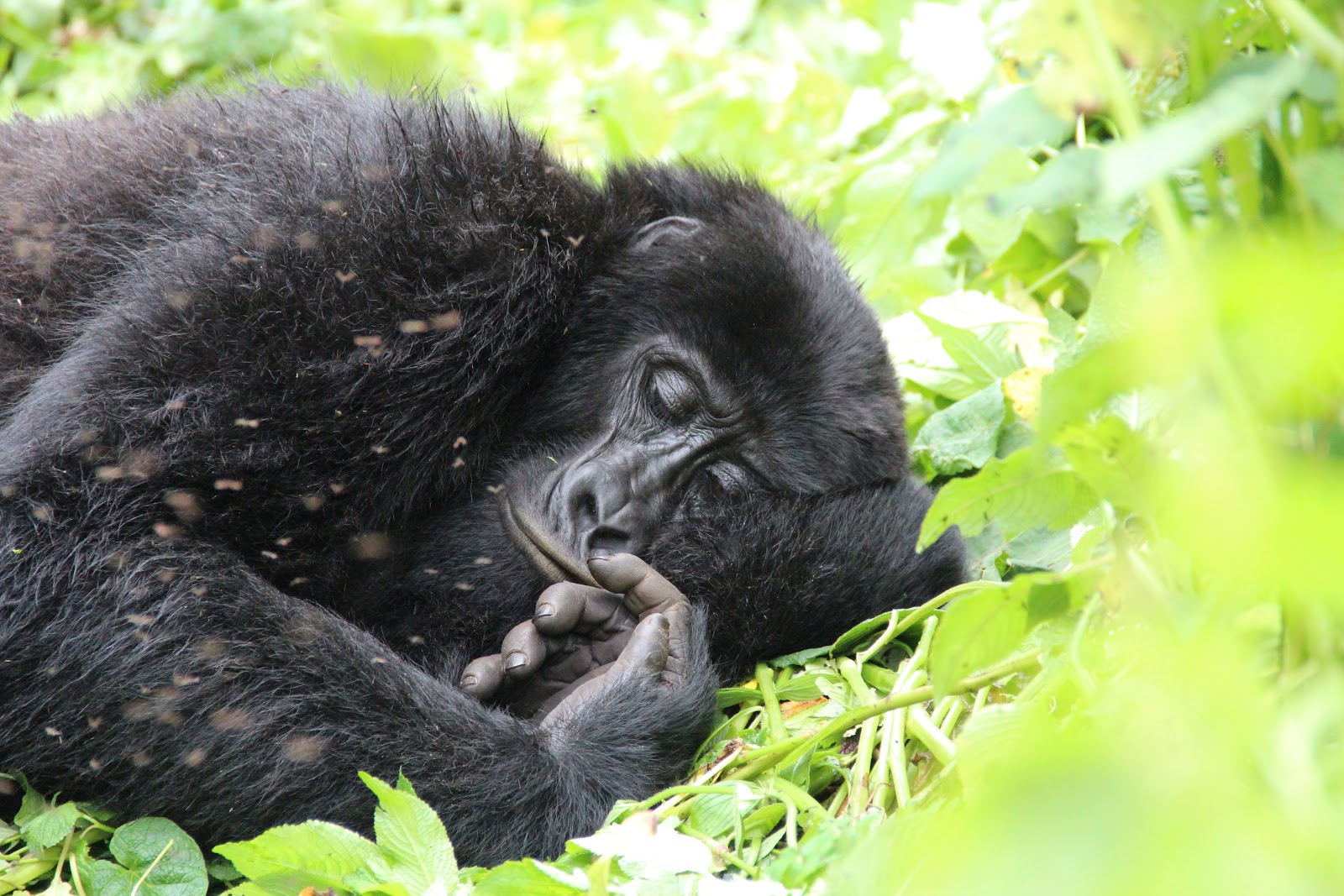
We were fortunate enough to see between 10 to 15 of the 17 gorillas in the Rushegura group, including the silverback and a tiny baby (hilarious). They are startlingly desensitized to humans and it often seemed like were posing for the cameras. A young gorilla walked passed Erin and me only about 5 ft away, which shows how comfortable they can be around humans, and I had to scramble to get some video of this and still enjoy the moment. At least the government limits their exposure to humans to 8 visitors per day for no more than 1 hour, which was plenty.


After our 1 hour was up, we headed back towards our camp and had a short lunch in a clearing while trying to avoid the swarms of ants we saw on the way up the mountain. We managed the slippery slope down without any major injuries (only some to our pride) and were given certificates of completion of the tracking with hopes that we would tell others of our good experience. I was nervous about our safety beforehand, being that the huge silverback could probably rip me in half without breaking a sweat, but the guides took good care of us and knew exactly how to interact with the gorillas and still keep everyone safe. Overall, it was remarkable to see an animal so similar to us (98% by DNA) but living such different lives.

(Written on November 2nd)

Take your plans and throw them out the window

To prepare for our trip, we spent hours and hours planning and looking up minute details.  Not only deciding where we wanted to go, but also finding out transportation for each location (usually buses), what time they leave, and how much it will cost. A week ago, I remember riding home from work and thinking about how some of our adventures won't exactly go according to the plans.  Being somewhat of a control freak, I was trying to prepare myself for the mentality of 'go with the flow' for when our plans don't work out.  Up to this point, I feel like we are putting that motto to go use and getting a lot of practice at rearranging plans on the spot.  Everything has been a whirlwind so far.

It started back in the U.S. when we missed one of our flights.  The thought made me feel sick to my stomach.  "Frankenstorm" was about to hit the East Coast and we needed to catch the next flight headed toward Uganda, or else we would have been stuck for days.  We had a couple choices to reroute to catch a plane out of the East Coast, and luckily we chose to fly our of New York instead of Washington D.C. because the flight we would have taken out of D.C. ended up being canceled.

So with a flight disaster narrowly averted, we continued with a positive outlook, and tried to get as much rest on the plane rides as possible.  We had originally scheduled an extra day in Kampala, Uganda, the fact that we lost more than half a day didn't feel like the end of the world.

We arrived in Entebbe, Uganda at 7am in the morning.  We found our luggage without a problem and breezed through customs to find a taxi waiting to take us into town to the bus station.  Kampala, the capital, is only an hour away, but we were unprepared for the overcrowded buses here, which are really more like minivans where they try to fit 16 people.  Each has a driver and a 'guide' who manages packing everyone in and collecting the money.  The whole way to Kampala, they were happily honking and waving at everyone along the way.  We made several stops to drop people off and pick them up before we finally made it to Kampala.

Kampala is a bustling city, and I've never seen so many people just hanging out on the street.  We were overwhelmed at first.  We were obvious stand-outs in the crowded street.  People with 'boda bodas' (motorcycle taxis) were calling out to give us a ride.  When turning a street corner, I heard "muzungu" several times, which just means "white person."  Little boys came up to us with their hands outstretched asking for money.

We managed to find a taxi leaving in the direction of our hostel (really much like the overstuffed bus we took to Kampala), and hopped on, looking forward to a shower and food because we had not eaten all day.  Our hostel was called Red Chili Hideaway, and that is very fitting because it took several attempts for us to locate it (including an extra bus ride).

When we arrived, we set up camp thinking we would have a relaxing night before taking the early bus to Bwindi Impenetrable Forest the next morning.  But we could eat or shower, we found out from the driver at the hostel that there would be no bus the next day.  There was only a bus that evening that left at 7pm and traveled all night.  So we immediately packed up our things again and took off.

The bus ride was hard to describe.  This was more like an old charter bus.  For all of the Webers,  Sam says that it reminded him of the buses in Ecuador where you close your eyes and say a prayer (being nighttime, it was good not to be able to see the road.  The roads to Bwindi are not always paved, so the bus shook violently over the bumps and ruts in the road, which made it difficult to sleep.  We were lucky we sat just in front of another American who was living in Bwindi for several months.  She was traveling with a native from Bwindi, and they graciously gave us a ride to our rest camp in the morning when we finally arrived after almost 12 hours.

Of course we headed straight for the food and showers when we got in.  We plan to rest for the remainder of the day and prepare for tracking the mountain gorillas tomorrow!

(Written October 31st)